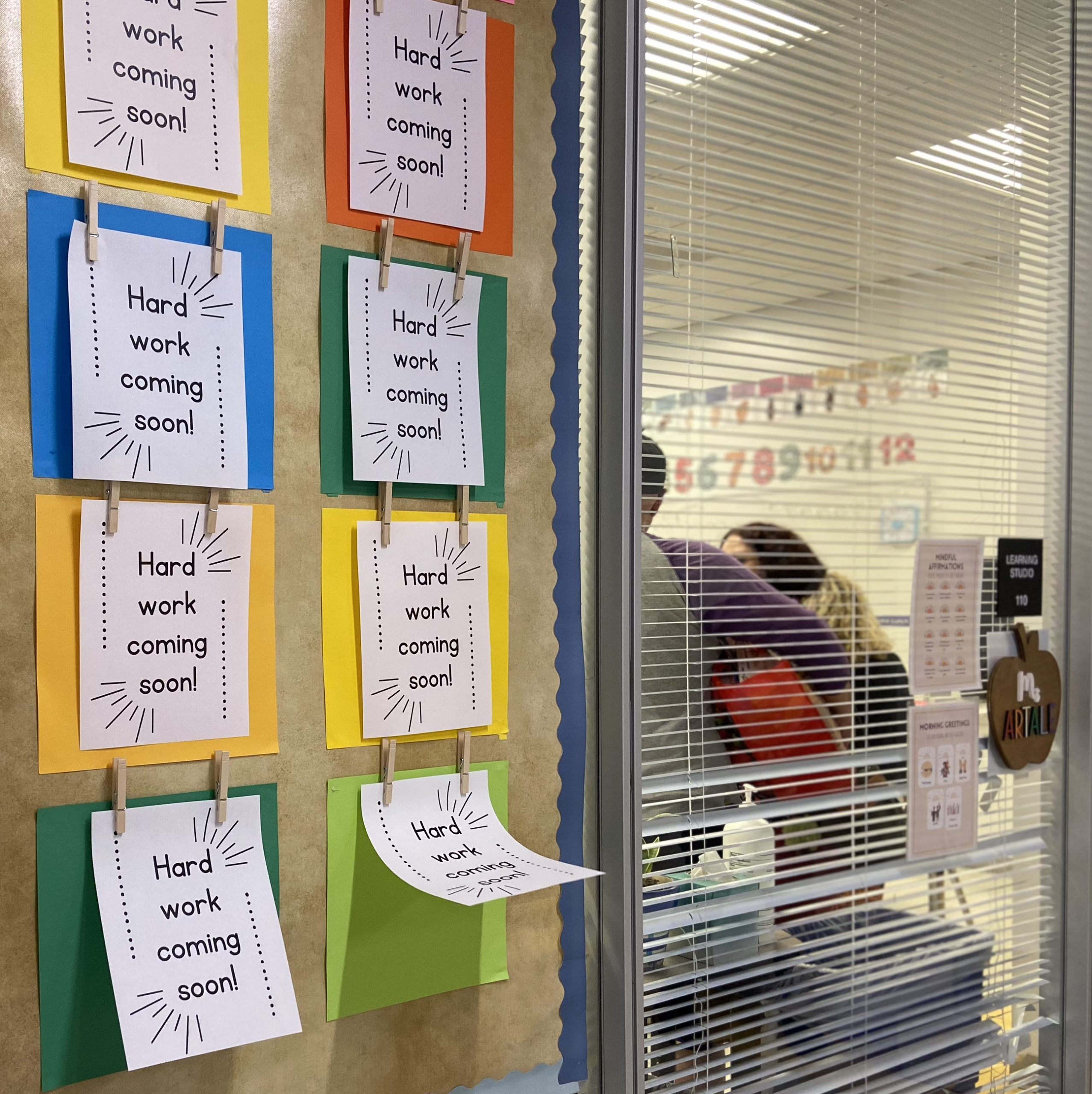

Most people think love in schools means comfort.
Support.
Protection.
That belief feels kind.
It is also incomplete.
Because love that only comforts does not prepare students for challenge.
And challenge is where growth lives.
High expectations, when done right, are not pressure.
They are belief in action.
They say to students:
You are capable.
You can handle hard things.
We will walk with you, not around the work.
That belief shapes everything.

Caring Means Believing Kids Can Grow
Real care does not remove struggle.
It helps students move through it.
When adults believe in students, they do not rush to lower expectations.
They stay present.
They coach.
They encourage.
They say, “This is hard—and you are not alone.”
Here is a truth we do not say enough:
Lowering expectations does not protect students. It teaches them to doubt themselves.
And when we remove challenge in the name of kindness, we do not make school gentler—we make it smaller.
High expectations tell students their effort matters.
Their thinking matters.
Their growth matters.
That belief changes how students see themselves.
Challenge Shows Students They Matter
Low expectations send a quiet message.
They say, “We don’t think you can handle this.”
High expectations say the opposite.
They say, “We trust you.”
Recently, nearly 40 middle school students from KC Girls Prep Academy joined us for a Shadow Day.
They came with real questions.
They wanted honesty.
And our students led the day.
They shared what learning is really like.
They spoke about challenges.
They answered openly—without scripts.
That moment mattered.
Students were trusted to represent themselves and their school.
They were expected to think, reflect, and lead.
And they rose to it.
Challenge, when paired with support, builds confidence.
It tells students they are ready—even before they feel it themselves.
We Grow Students Together
High expectations cannot live in one classroom or one office.
They must be shared.
Strong schools are built on clear goals and shared responsibility.
Students know what is expected.
Teachers hold themselves to high standards.
Families are partners.
Leaders stay accountable.
When expectations are shared, students feel surrounded—not squeezed.
Belief becomes consistent.
And consistency builds trust.
Growth does not happen alone.
It happens in community.
What High Expectations Really Mean
High expectations are not about being strict.
They are about being steady.
They mean:
- Expecting effort, not perfection
- Encouraging curiosity, not shortcuts
- Valuing thinking, not just answers
- Supporting students through challenge
They mean trusting teachers to adapt learning for students.
They mean using research to improve, not to judge.
Most of all, they mean refusing to confuse kindness with ease.
Looking Ahead
The future of learning will not belong to schools that choose comfort over growth.
And it will not belong to schools that demand growth without care.
It will belong to schools that hold both.
Schools that love students enough to challenge them.
Schools that trust students with real responsibility.
Schools that believe students are capable—even before they prove it.
Because the strongest message a school can send is simple:
We believe you can do hard things.
That belief stays with students long after the lesson ends.
That is high expectations—with heart.