
The first day of school gets the pictures. The first few weeks shape the people.
That’s easy to miss.
On the first day, everyone notices the backpacks, the new shoes, and the nervous smiles. Parents wonder how their children will do. Students wonder where they fit. Teachers are already thinking about something else.
Not just who students are today. Who they can become.
That’s the real work of the first few weeks.
It doesn’t always look like learning. But that’s exactly what it is.
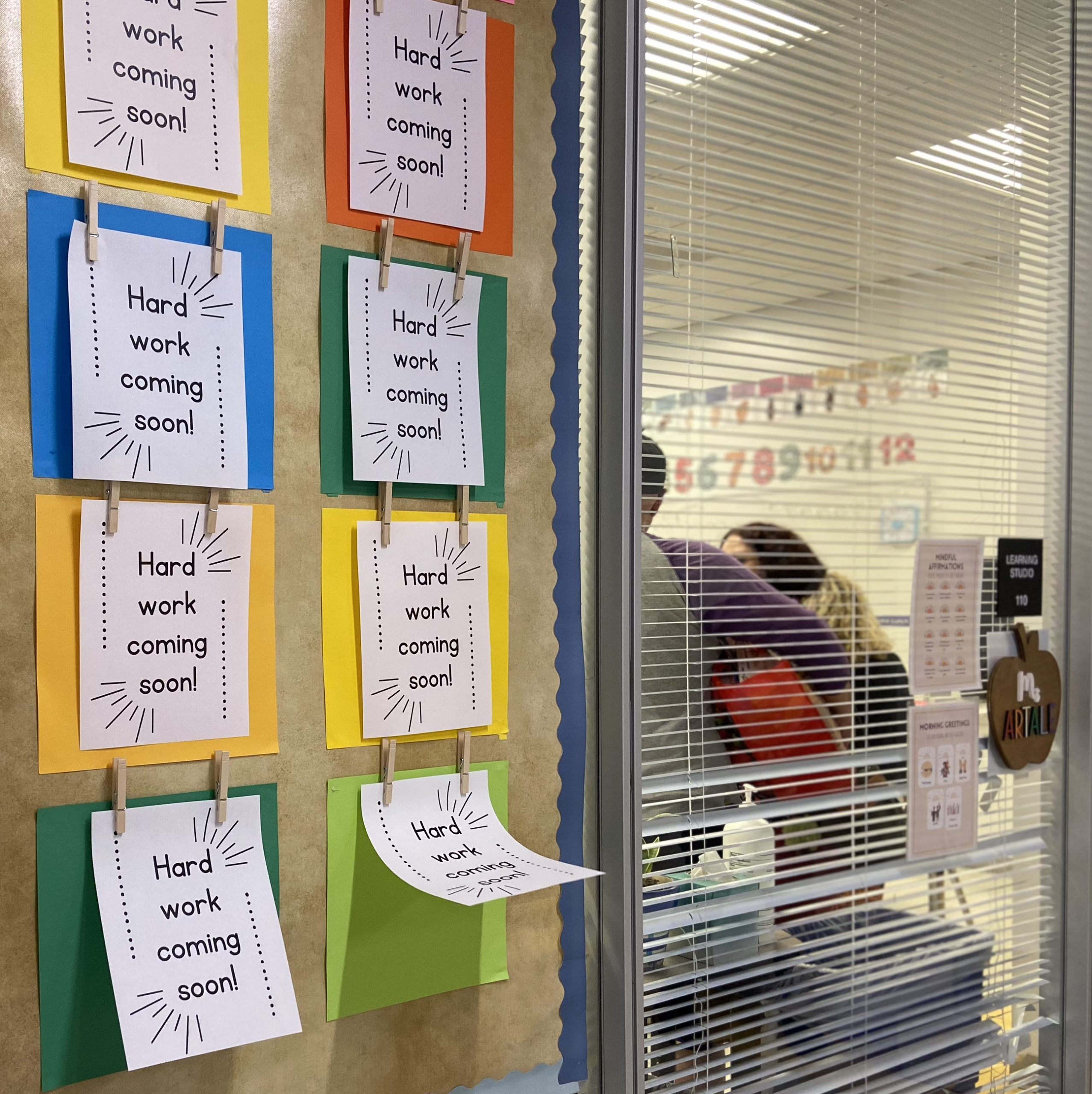
It looks like students are practicing routines.
They’re really learning how to belong.
If you walk through a school during the first week, you probably won’t see the biggest lesson of the day written on the board.
Instead, you’ll see students practicing how to enter the room, where to put their backpack, how to work with a partner, and what it means to really listen when someone else is speaking.
Some people see repetition.
Teachers see confidence taking shape.
Every routine removes uncertainty. Every clear expectation helps students relax. Instead of wondering what they’re supposed to do next, they can focus on thinking, creating, and learning.
Researchers have found that predictable classroom routines reduce unnecessary mental load and create more space for learning. Great teachers have understood that long before it became a research paper.
The routine isn’t the lesson.
The routine makes the lesson possible.
It looks like teachers are learning names.
They’re really building trust.
A name is one of the first ways a student knows they matter.
Then the real work begins.
Teachers notice who jumps into every conversation and who quietly watches from the edge. They notice who lights up when they solve a problem and who needs someone to say, “Try one more time.”
Those moments rarely show up on a report card.
They shape almost everything that does.
Students are far more willing to take academic risks when they believe an adult truly knows them. That sense of belonging is one of the strongest predictors of engagement and long-term success.
Before students believe in themselves, they often borrow belief from someone else.
It looks like small victories.
They’re really building identity.
–A hand goes up for the first time.
–A student who was afraid to read out loud volunteers for a paragraph.
–A class solves a problem together without the teacher stepping in.
Those moments disappear almost as quickly as they happen. Teachers don’t forget them.
Because confidence doesn’t grow from praise alone. It grows from proof.
One success becomes another. Then another.
Eventually a student stops thinking,“I hope I can do this.”
And starts believing, “I’m the kind of person who can.”
That may be the most important lesson of all.
It looks like another school year.
It’s really the beginning of a future.
At Crossroads, learning has never been about moving students from one grade to the next.
It’s about preparing them for the life waiting beyond the classroom.
That’s why students learn through real experiences, work together to solve meaningful problems, and connect what they’re learning to the world around them.
The goal isn’t simply to help students remember information. It’s to help them become thoughtful, capable people who are ready to contribute to their communities. That commitment to real-world learning is central to the Crossroads mission.
The first day opens the school year. The first few weeks begin shaping the person.
And that’s why those quiet moments that rarely make the first-day photo often matter the most.
Because what looks like school…is really preparation for life.
___________
P.S. This isn’t a newsletter about what happens at Crossroads. It’s about why it happens.
Every week, Built for What’s Next explores the moments that shape confident learners and lives prepared for what’s next.
Learn more at CrossroadsSchoolsKC.org.